
January 8 - 10
11th Surgical Safety Network Annual Conference

An exclusive cross-institutional collaboration to improve outcomes through technology
About
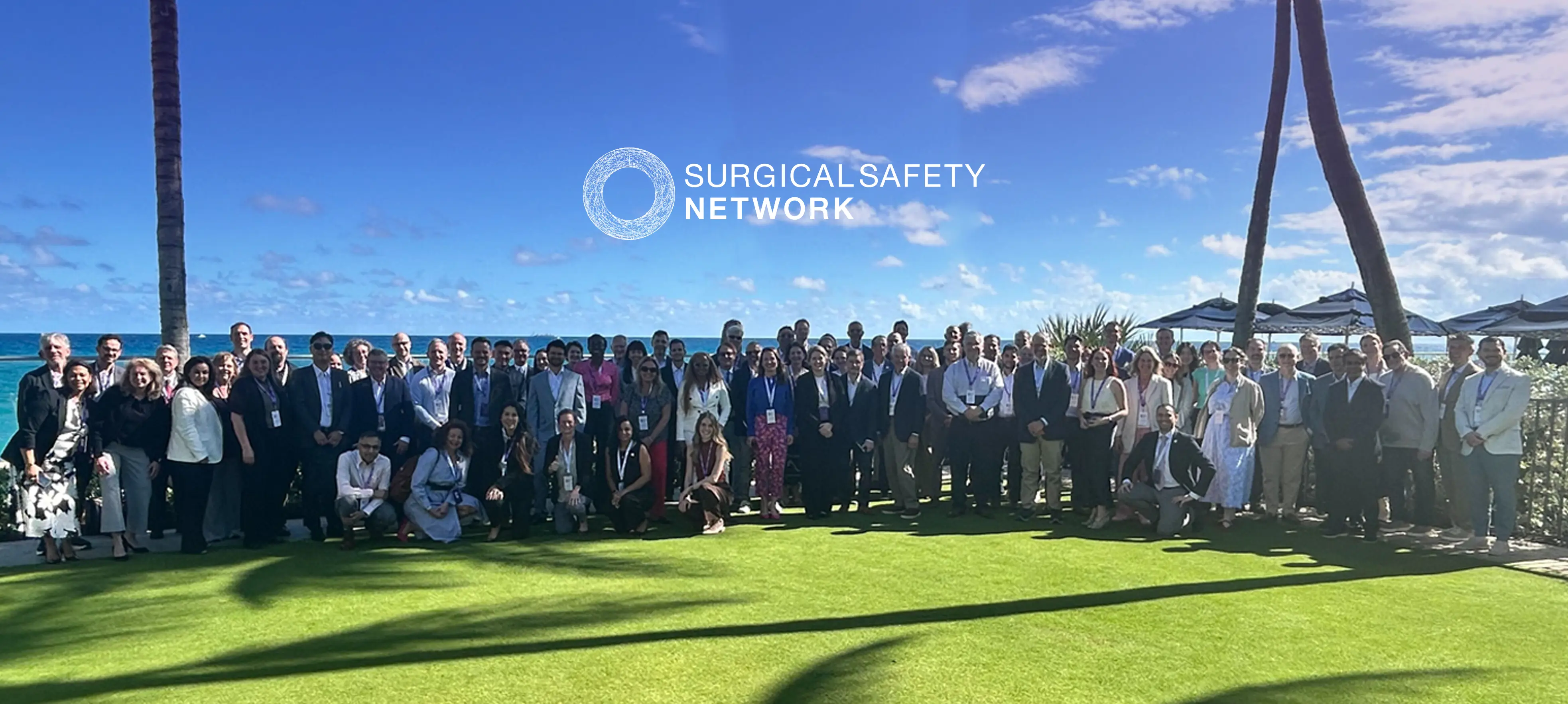
A clear message emerged from the 11th Annual Surgical Safety Network Conference (SSN 2026): the most effective surgical safety systems combine skilled, well-trained clinicians with thoughtfully designed workflows. Clinical training is essential, but consistent; high-quality performance depends on the systems that surround and reinforce it.
2026
Insights
Surgical Safety Systems Are Built to Support Trained Professionals
In modern operating rooms, complexity and cognitive load are unavoidable. Surgical safety systems help absorb that complexity by standardizing critical steps, reducing unnecessary variation, and anticipating risk. When systems are well designed, they allow trained teams to focus on clinical judgment rather than workarounds - especially during moments of stress, transition, or unexpected change.
From Outcomes to Process Insight: Measuring Surgical Safety Systems
Medical errors, adverse events, and delays are essential indicators - but they are lagging measures. They reveal what happened, not how surgical safety systems perform in real time.
To drive improvement, organizations must measure the processes that trained teams rely on every day. Metrics such as pause-point completion, checklist adherence by role, near-miss frequency, handoff friction, and time-to-mitigation provide visibility into how surgical safety systems function under real conditions.
Psychological Safety: A Core Component of Surgical Safety Systems
Conference speakers emphasized that psychological safety is measurable and predictive. Teams with higher levels of psychological safety identify near-misses earlier, recover from disruptions more effectively, and demonstrate greater resilience over time. In contrast, silence undermines even the strongest technical systems.
Simulation was repeatedly highlighted as a powerful mechanism for strengthening this aspect of surgical safety systems.
Measure the Work to Strengthen Surgical Safety Systems
Day 2 of SSN 2026 reinforced the idea of tracking process reliability - such as checklist execution, near-miss ratios, and response times – to show how consistently surgical safety systems support teams across different cases, shifts, and service lines.
When measurement is framed as learning rather than surveillance, it becomes a core driver of system reliability.
Technology That Strengthens Surgical Safety Systems
Technology played a prominent role in conference discussions, particularly tools that surface operational reality, such as the Aimbient Suite™ and its Room State™ module. These technologies enhance surgical safety systems by making near-misses, deviations, and coordination challenges visible.
When paired with psychological safety and strong leadership, data becomes a catalyst for improvement rather than a source of defensiveness.
Efficiency as an Outcome of Strong Surgical Safety Systems
Discussions around surgical efficiency reframed the problem as one of predictability and cognitive load. OR inefficiency often stems from fragmented information, unclear ownership, and constant micro-disruptions that tax even highly trained teams.
Well-designed surgical safety systems reduce this burden through automation, real-time visibility, and standardized workflows. By creating an “air traffic control” model for the OR, leaders can spot outliers, improve staffing decisions, and reduce burnout, overtime surprises, and turnover.




Swipe for more images > >
January 8 - 10
11th Surgical Safety Network Annual Conference
An exclusive cross-institutional collaboration to improve outcomes through technology
About
A clear message emerged from the 11th Annual Surgical Safety Network Conference (SSN 2026): the most effective surgical safety systems combine skilled, well-trained clinicians with thoughtfully designed workflows. Clinical training is essential, but consistent; high-quality performance depends on the systems that surround and reinforce it.
2026
Insights
Surgical Safety Systems Are Built to Support Trained Professionals
In modern operating rooms, complexity and cognitive load are unavoidable. Surgical safety systems help absorb that complexity by standardizing critical steps, reducing unnecessary variation, and anticipating risk. When systems are well designed, they allow trained teams to focus on clinical judgment rather than workarounds - especially during moments of stress, transition, or unexpected change.
From Outcomes to Process Insight: Measuring Surgical Safety Systems
Medical errors, adverse events, and delays are essential indicators - but they are lagging measures. They reveal what happened, not how surgical safety systems perform in real time.
To drive improvement, organizations must measure the processes that trained teams rely on every day. Metrics such as pause-point completion, checklist adherence by role, near-miss frequency, handoff friction, and time-to-mitigation provide visibility into how surgical safety systems function under real conditions.
Psychological Safety: A Core Component of Surgical Safety Systems
Conference speakers emphasized that psychological safety is measurable and predictive. Teams with higher levels of psychological safety identify near-misses earlier, recover from disruptions more effectively, and demonstrate greater resilience over time. In contrast, silence undermines even the strongest technical systems.
Simulation was repeatedly highlighted as a powerful mechanism for strengthening this aspect of surgical safety systems.
Measure the Work to Strengthen Surgical Safety Systems
Day 2 of SSN 2026 reinforced the idea of tracking process reliability - such as checklist execution, near-miss ratios, and response times – to show how consistently surgical safety systems support teams across different cases, shifts, and service lines.
When measurement is framed as learning rather than surveillance, it becomes a core driver of system reliability.
Technology That Strengthens Surgical Safety Systems
Technology played a prominent role in conference discussions, particularly tools that surface operational reality, such as the Aimbient Suite™ and its Room State™ module. These technologies enhance surgical safety systems by making near-misses, deviations, and coordination challenges visible.
When paired with psychological safety and strong leadership, data becomes a catalyst for improvement rather than a source of defensiveness.
Efficiency as an Outcome of Strong Surgical Safety Systems
Discussions around surgical efficiency reframed the problem as one of predictability and cognitive load. OR inefficiency often stems from fragmented information, unclear ownership, and constant micro-disruptions that tax even highly trained teams.
Well-designed surgical safety systems reduce this burden through automation, real-time visibility, and standardized workflows. By creating an “air traffic control” model for the OR, leaders can spot outliers, improve staffing decisions, and reduce burnout, overtime surprises, and turnover.
Swipe for more images > >
January 8 - 10
11th Surgical Safety Network Annual Conference
An exclusive cross-institutional collaboration to improve outcomes through technology
About
A clear message emerged from the 11th Annual Surgical Safety Network Conference (SSN 2026): the most effective surgical safety systems combine skilled, well-trained clinicians with thoughtfully designed workflows. Clinical training is essential, but consistent; high-quality performance depends on the systems that surround and reinforce it.
2026
Insights
Surgical Safety Systems Are Built to Support Trained Professionals
In modern operating rooms, complexity and cognitive load are unavoidable. Surgical safety systems help absorb that complexity by standardizing critical steps, reducing unnecessary variation, and anticipating risk. When systems are well designed, they allow trained teams to focus on clinical judgment rather than workarounds - especially during moments of stress, transition, or unexpected change.
From Outcomes to Process Insight: Measuring Surgical Safety Systems
Medical errors, adverse events, and delays are essential indicators - but they are lagging measures. They reveal what happened, not how surgical safety systems perform in real time.
To drive improvement, organizations must measure the processes that trained teams rely on every day. Metrics such as pause-point completion, checklist adherence by role, near-miss frequency, handoff friction, and time-to-mitigation provide visibility into how surgical safety systems function under real conditions.
Psychological Safety: A Core Component of Surgical Safety Systems
Conference speakers emphasized that psychological safety is measurable and predictive. Teams with higher levels of psychological safety identify near-misses earlier, recover from disruptions more effectively, and demonstrate greater resilience over time. In contrast, silence undermines even the strongest technical systems.
Simulation was repeatedly highlighted as a powerful mechanism for strengthening this aspect of surgical safety systems.
Measure the Work to Strengthen Surgical Safety Systems
Day 2 of SSN 2026 reinforced the idea of tracking process reliability - such as checklist execution, near-miss ratios, and response times – to show how consistently surgical safety systems support teams across different cases, shifts, and service lines.
When measurement is framed as learning rather than surveillance, it becomes a core driver of system reliability.
Technology That Strengthens Surgical Safety Systems
Technology played a prominent role in conference discussions, particularly tools that surface operational reality, such as the Aimbient Suite™ and its Room State™ module. These technologies enhance surgical safety systems by making near-misses, deviations, and coordination challenges visible.
When paired with psychological safety and strong leadership, data becomes a catalyst for improvement rather than a source of defensiveness.
Efficiency as an Outcome of Strong Surgical Safety Systems
Discussions around surgical efficiency reframed the problem as one of predictability and cognitive load. OR inefficiency often stems from fragmented information, unclear ownership, and constant micro-disruptions that tax even highly trained teams.
Well-designed surgical safety systems reduce this burden through automation, real-time visibility, and standardized workflows. By creating an “air traffic control” model for the OR, leaders can spot outliers, improve staffing decisions, and reduce burnout, overtime surprises, and turnover.
Swipe for more images > >