
January 2 - 4
10th Surgical Safety Network Annual Conference

An exclusive cross-institutional collaboration to improve outcomes through technology
About
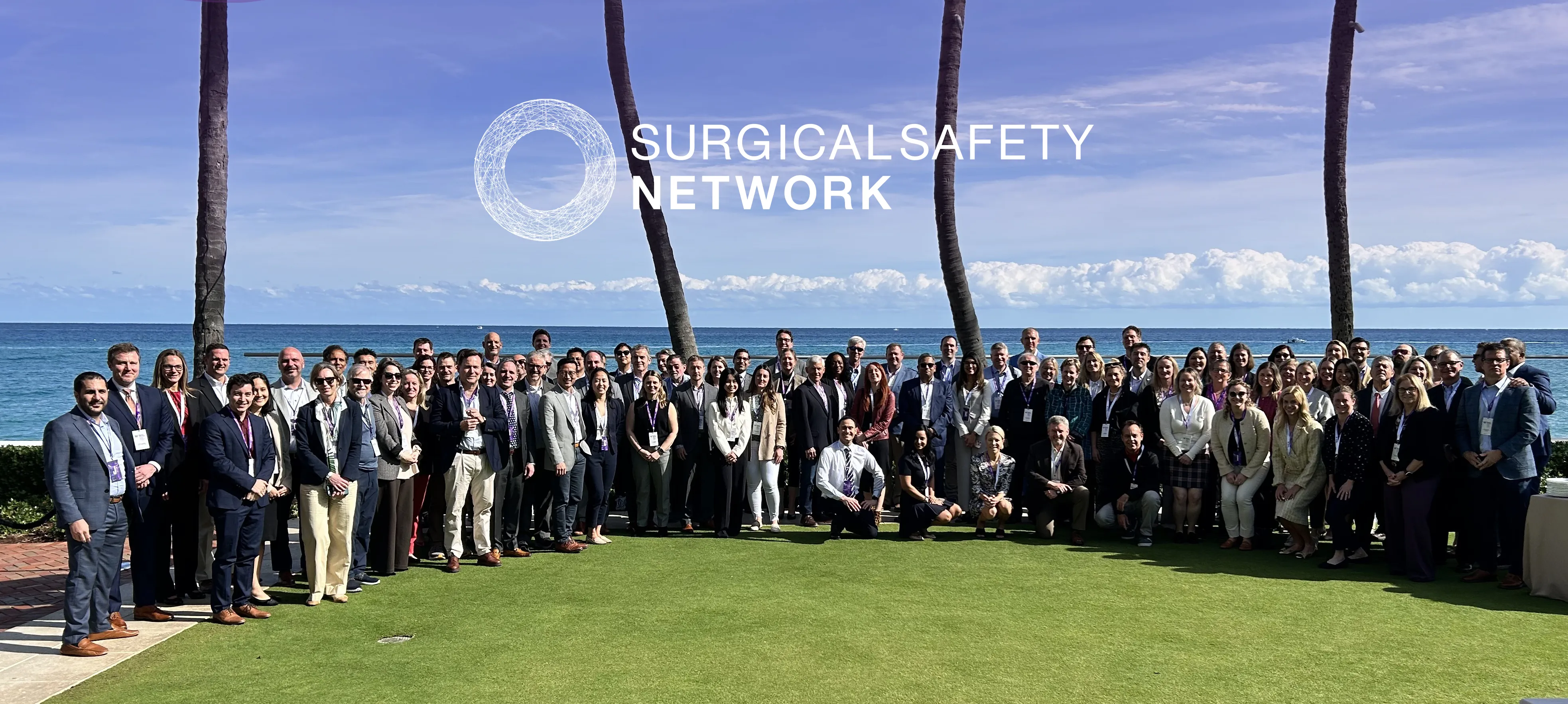
The 2025 Surgical Safety Network Annual Meeting showcased transformative shifts in surgical performance, technology, and patient care. Healthcare stands at a pivotal crossroads where technological innovation intersects with cultural evolution. Five key insights from the meeting are redefining surgical excellence and are transforming healthcare as we know it.
2025
Insights
1. Data-Driven Healthcare: The Intelligent Surgical Ecosystem
Artificial Intelligence (AI) revolutionizes surgical data analysis. Surgeons and healthcare teams now access insights that help prevent complications. This shift moves from a retrospective approach to a proactive, predictive one, transforming healthcare by enabling more precise, data-driven decisions.
A study at an academic medical center demonstrated the impact of automated outlier detection in predicting critical outcomes.
2. Efficiency Reimagined: The Holistic Team Performance Model
Efficiency in surgery is no longer defined by individual skill alone. While technical expertise remains critical, the modern surgical environment demands a more collaborative, holistic approach to achieving optimal outcomes. This shift in the way we measure and achieve success is transforming healthcare by focusing on the power of collective effort over individual performance.
By fostering a cohesive, well-prepared team, healthcare systems can improve both patient safety and surgical outcomes.
3. Cultural Transformation: Technology as an Empowerment Tool
Integrating new technologies requires more than simply adopting advanced tools. It demands a profound cultural shift within healthcare organizations.
Dr. Michael Pfeffer, Chief Information Officer at Stanford Health Care, highlighted that technological adoption often starts at the grassroots level. Leadership sets goals, but innovation thrives from below. Frontline staff face daily challenges, and they are in the best position to drive innovation from the ground up.
4. Collaborative Knowledge Networks: Breaking Institutional Barriers
Healthcare institutions are evolving. They no longer work in isolation. A shift toward collaboration, not competition, is occurring across the surgical community.
This interconnected approach enables healthcare institutions to work together toward shared goals. Leveraging collective intelligence improves patient safety and surgical outcomes.
5. Comprehensive Value Measurement: Beyond Financial Metrics
Healthcare organizations now recognize that value extends beyond financial performance. This shift in how we define and measure value is transforming healthcare by prioritizing patient outcomes and staff well-being alongside financial considerations.
Focusing on these diverse value measures allows healthcare organizations to align their strategies with long-term goals.
Recommended Reading
Surgical Safety Technologies. (2024, November 19). Optimizing the Surgical Workflow with AI-Powered Insights [blog]. https://www.surgicalsafety.com/blog/optimizing-the-surgical-workflow-with-artificial-intelligence
Surgical Safety Technologies. (2024, September 6). Improve Patient Outcomes Through Automated Event Detection [blog]. https://www.surgicalsafety.com/blog/improve-patient-outcomes-through-automated-event-detection
Surgical Safety Technologies. (2025, January 9). Surgery Videos: Transforming OR Training [blog]. https://www.surgicalsafety.com/blog/surgery-videos-transforming-training
Surgical Safety Technologies. (2025, January 15). Maximizing Surgery Scheduling Investment with Real-time Data [blog]. https://www.surgicalsafety.com/blog/maximizing-surgery-scheduling








Swipe for more images > >
January 2 - 4
10th Surgical Safety Network Annual Conference
An exclusive cross-institutional collaboration to improve outcomes through technology
About
The 2025 Surgical Safety Network Annual Meeting showcased transformative shifts in surgical performance, technology, and patient care. Healthcare stands at a pivotal crossroads where technological innovation intersects with cultural evolution. Five key insights from the meeting are redefining surgical excellence and are transforming healthcare as we know it.
2025
Insights
1. Data-Driven Healthcare: The Intelligent Surgical Ecosystem
Artificial Intelligence (AI) revolutionizes surgical data analysis. Surgeons and healthcare teams now access insights that help prevent complications. This shift moves from a retrospective approach to a proactive, predictive one, transforming healthcare by enabling more precise, data-driven decisions.
A study at an academic medical center demonstrated the impact of automated outlier detection in predicting critical outcomes.
2. Efficiency Reimagined: The Holistic Team Performance Model
Efficiency in surgery is no longer defined by individual skill alone. While technical expertise remains critical, the modern surgical environment demands a more collaborative, holistic approach to achieving optimal outcomes. This shift in the way we measure and achieve success is transforming healthcare by focusing on the power of collective effort over individual performance.
By fostering a cohesive, well-prepared team, healthcare systems can improve both patient safety and surgical outcomes.
3. Cultural Transformation: Technology as an Empowerment Tool
Integrating new technologies requires more than simply adopting advanced tools. It demands a profound cultural shift within healthcare organizations.
Dr. Michael Pfeffer, Chief Information Officer at Stanford Health Care, highlighted that technological adoption often starts at the grassroots level. Leadership sets goals, but innovation thrives from below. Frontline staff face daily challenges, and they are in the best position to drive innovation from the ground up.
4. Collaborative Knowledge Networks: Breaking Institutional Barriers
Healthcare institutions are evolving. They no longer work in isolation. A shift toward collaboration, not competition, is occurring across the surgical community.
This interconnected approach enables healthcare institutions to work together toward shared goals. Leveraging collective intelligence improves patient safety and surgical outcomes.
5. Comprehensive Value Measurement: Beyond Financial Metrics
Healthcare organizations now recognize that value extends beyond financial performance. This shift in how we define and measure value is transforming healthcare by prioritizing patient outcomes and staff well-being alongside financial considerations.
Focusing on these diverse value measures allows healthcare organizations to align their strategies with long-term goals.
Recommended Reading
Surgical Safety Technologies. (2024, November 19). Optimizing the Surgical Workflow with AI-Powered Insights [blog]. https://www.surgicalsafety.com/blog/optimizing-the-surgical-workflow-with-artificial-intelligence
Surgical Safety Technologies. (2024, September 6). Improve Patient Outcomes Through Automated Event Detection [blog]. https://www.surgicalsafety.com/blog/improve-patient-outcomes-through-automated-event-detection
Surgical Safety Technologies. (2025, January 9). Surgery Videos: Transforming OR Training [blog]. https://www.surgicalsafety.com/blog/surgery-videos-transforming-training
Surgical Safety Technologies. (2025, January 15). Maximizing Surgery Scheduling Investment with Real-time Data [blog]. https://www.surgicalsafety.com/blog/maximizing-surgery-scheduling
Swipe for more images > >
January 2 - 4
10th Surgical Safety Network Annual Conference
An exclusive cross-institutional collaboration to improve outcomes through technology
About
The 2025 Surgical Safety Network Annual Meeting showcased transformative shifts in surgical performance, technology, and patient care. Healthcare stands at a pivotal crossroads where technological innovation intersects with cultural evolution. Five key insights from the meeting are redefining surgical excellence and are transforming healthcare as we know it.
2025
Insights
1. Data-Driven Healthcare: The Intelligent Surgical Ecosystem
Artificial Intelligence (AI) revolutionizes surgical data analysis. Surgeons and healthcare teams now access insights that help prevent complications. This shift moves from a retrospective approach to a proactive, predictive one, transforming healthcare by enabling more precise, data-driven decisions.
A study at an academic medical center demonstrated the impact of automated outlier detection in predicting critical outcomes.
2. Efficiency Reimagined: The Holistic Team Performance Model
Efficiency in surgery is no longer defined by individual skill alone. While technical expertise remains critical, the modern surgical environment demands a more collaborative, holistic approach to achieving optimal outcomes. This shift in the way we measure and achieve success is transforming healthcare by focusing on the power of collective effort over individual performance.
By fostering a cohesive, well-prepared team, healthcare systems can improve both patient safety and surgical outcomes.
3. Cultural Transformation: Technology as an Empowerment Tool
Integrating new technologies requires more than simply adopting advanced tools. It demands a profound cultural shift within healthcare organizations.
Dr. Michael Pfeffer, Chief Information Officer at Stanford Health Care, highlighted that technological adoption often starts at the grassroots level. Leadership sets goals, but innovation thrives from below. Frontline staff face daily challenges, and they are in the best position to drive innovation from the ground up.
4. Collaborative Knowledge Networks: Breaking Institutional Barriers
Healthcare institutions are evolving. They no longer work in isolation. A shift toward collaboration, not competition, is occurring across the surgical community.
This interconnected approach enables healthcare institutions to work together toward shared goals. Leveraging collective intelligence improves patient safety and surgical outcomes.
5. Comprehensive Value Measurement: Beyond Financial Metrics
Healthcare organizations now recognize that value extends beyond financial performance. This shift in how we define and measure value is transforming healthcare by prioritizing patient outcomes and staff well-being alongside financial considerations.
Focusing on these diverse value measures allows healthcare organizations to align their strategies with long-term goals.
Recommended Reading
Surgical Safety Technologies. (2024, November 19). Optimizing the Surgical Workflow with AI-Powered Insights [blog]. https://www.surgicalsafety.com/blog/optimizing-the-surgical-workflow-with-artificial-intelligence
Surgical Safety Technologies. (2024, September 6). Improve Patient Outcomes Through Automated Event Detection [blog]. https://www.surgicalsafety.com/blog/improve-patient-outcomes-through-automated-event-detection
Surgical Safety Technologies. (2025, January 9). Surgery Videos: Transforming OR Training [blog]. https://www.surgicalsafety.com/blog/surgery-videos-transforming-training
Surgical Safety Technologies. (2025, January 15). Maximizing Surgery Scheduling Investment with Real-time Data [blog]. https://www.surgicalsafety.com/blog/maximizing-surgery-scheduling
Swipe for more images > >