
January 5 - 6
9th Surgical Safety Network Annual Conference

An exclusive cross-institutional collaboration to improve outcomes through technology
About
SSN 2024 explored how OR Black Box® and Black Box Explorer can support safer care across specialties, from neurosurgery and trauma to surgical education and research. The conference focused on practical questions: how to build a sustainable video review program, how to define KPIs that matter to different stakeholders, how to measure team performance in complex systems, and how to translate data into measurable improvements in safety, efficiency, education, and ROI.
Across sessions, speakers emphasized that the next phase of surgical safety depends on connecting objective data, multidisciplinary review, implementation strategy, and culture change.

2024
Insights
KPIs Must Balance Quality, Efficiency, Culture, and ROI
SSN 2024 placed strong emphasis on key performance indicators as the bridge between surgical safety work and organizational value. Quantitative metrics, such as turnover, utilization, overtime, case volume, and retained-object risk, are often easier to use in a business case. Qualitative metrics, such as culture of safety, team communication, psychological safety, and staff engagement, are harder to measure but essential to sustained improvement.
Automated Measurement Is Essential for Sustainable Improvement
A recurring theme was that manual measurement cannot scale. SSN 2024 highlighted automated KPI measurement as essential for sustainable performance improvement, especially when organizations are trying to monitor surgical safety across departments, service lines, and the full patient journey.
Surgical Safety Measurement Must Move Beyond Individuals to Teams and Systems
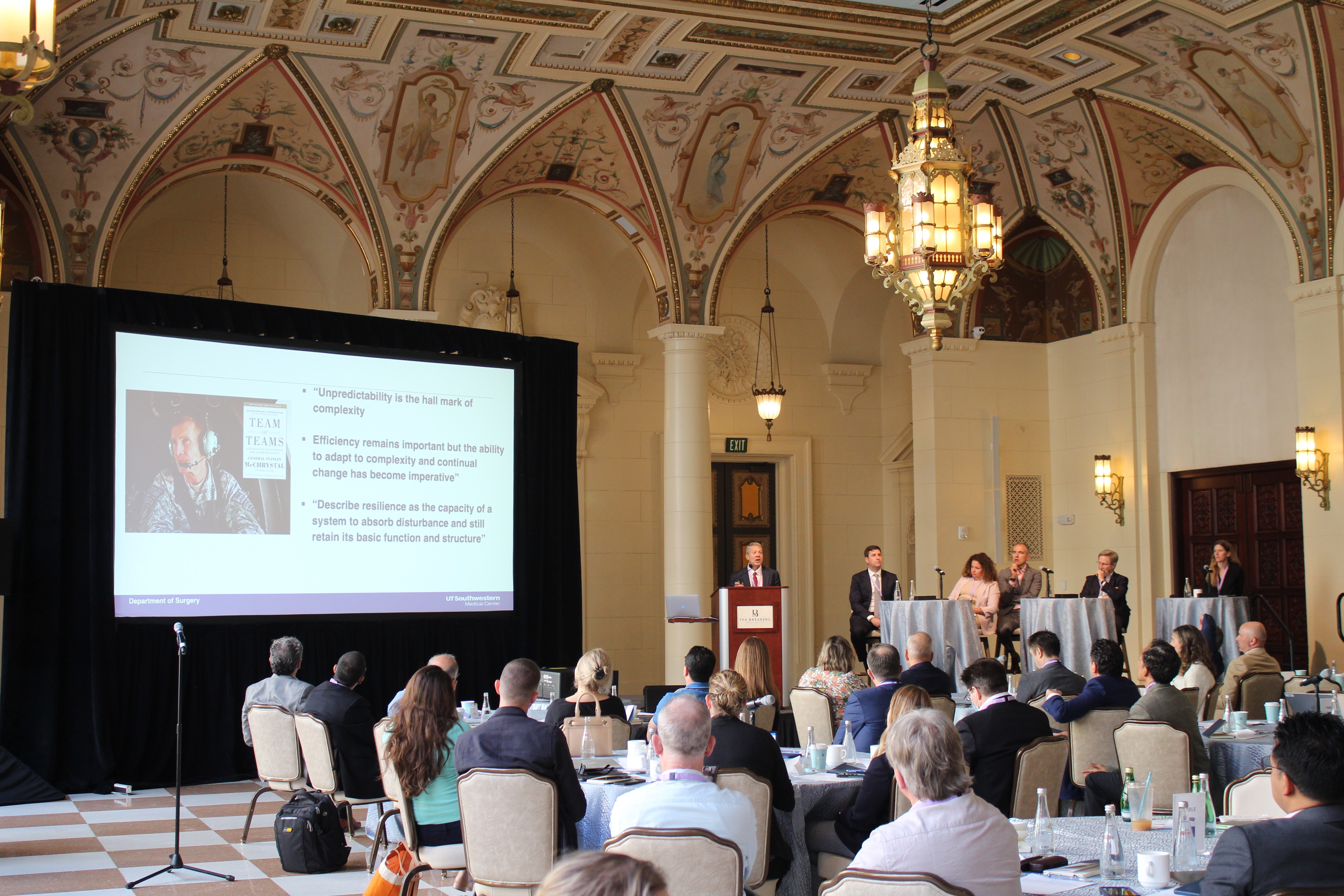
The 2024 Research Think Tank challenged traditional approaches to performance assessment. Instead of focusing only on individual technical competence, speakers emphasized that safe surgical care emerges from the interactions among people, tasks, tools, technology, environment, and organization.
A key insight was that competent individuals can still form an incompetent team. Conversely, the impact of an individual weakness depends on whether the surrounding team and system can compensate. This reframes performance measurement around the full clinical system, not just the surgeon or any single role.
Specialty-Specific Implementation Requires Local Ownership
The neurosurgery example demonstrated how ORBB can support specialty-specific safety work: wrong-laterality near-miss review, preoperative huddles, shunt infection checklist compliance, frailty and risk prediction, resident education, and intraoperative decision-making.
In addition, near-misses should be treated as powerful learning events. In the neurosurgery materials reviewed, wrong-laterality near misses were traced to positioning, distractions, and competing priorities. All cases were identified by attending providers, and the action plan was to perform the pre-incision timeout before draping. This example illustrates the value of structured multidisciplinary case review.




Swipe for more images > >
January 5 - 6
9th Surgical Safety Network Annual Conference
An exclusive cross-institutional collaboration to improve outcomes through technology
About
SSN 2024 explored how OR Black Box® and Black Box Explorer can support safer care across specialties, from neurosurgery and trauma to surgical education and research. The conference focused on practical questions: how to build a sustainable video review program, how to define KPIs that matter to different stakeholders, how to measure team performance in complex systems, and how to translate data into measurable improvements in safety, efficiency, education, and ROI.
Across sessions, speakers emphasized that the next phase of surgical safety depends on connecting objective data, multidisciplinary review, implementation strategy, and culture change.
2024
Insights
KPIs Must Balance Quality, Efficiency, Culture, and ROI
SSN 2024 placed strong emphasis on key performance indicators as the bridge between surgical safety work and organizational value. Quantitative metrics, such as turnover, utilization, overtime, case volume, and retained-object risk, are often easier to use in a business case. Qualitative metrics, such as culture of safety, team communication, psychological safety, and staff engagement, are harder to measure but essential to sustained improvement.
Automated Measurement Is Essential for Sustainable Improvement
A recurring theme was that manual measurement cannot scale. SSN 2024 highlighted automated KPI measurement as essential for sustainable performance improvement, especially when organizations are trying to monitor surgical safety across departments, service lines, and the full patient journey.
Surgical Safety Measurement Must Move Beyond Individuals to Teams and Systems
The 2024 Research Think Tank challenged traditional approaches to performance assessment. Instead of focusing only on individual technical competence, speakers emphasized that safe surgical care emerges from the interactions among people, tasks, tools, technology, environment, and organization.
A key insight was that competent individuals can still form an incompetent team. Conversely, the impact of an individual weakness depends on whether the surrounding team and system can compensate. This reframes performance measurement around the full clinical system, not just the surgeon or any single role.
Specialty-Specific Implementation Requires Local Ownership
The neurosurgery example demonstrated how ORBB can support specialty-specific safety work: wrong-laterality near-miss review, preoperative huddles, shunt infection checklist compliance, frailty and risk prediction, resident education, and intraoperative decision-making.
In addition, near-misses should be treated as powerful learning events. In the neurosurgery materials reviewed, wrong-laterality near misses were traced to positioning, distractions, and competing priorities. All cases were identified by attending providers, and the action plan was to perform the pre-incision timeout before draping. This example illustrates the value of structured multidisciplinary case review.
Swipe for more images > >
January 5 - 6
9th Surgical Safety Network Annual Conference
An exclusive cross-institutional collaboration to improve outcomes through technology
About
SSN 2024 explored how OR Black Box® and Black Box Explorer can support safer care across specialties, from neurosurgery and trauma to surgical education and research. The conference focused on practical questions: how to build a sustainable video review program, how to define KPIs that matter to different stakeholders, how to measure team performance in complex systems, and how to translate data into measurable improvements in safety, efficiency, education, and ROI.
Across sessions, speakers emphasized that the next phase of surgical safety depends on connecting objective data, multidisciplinary review, implementation strategy, and culture change.
2024
Insights
KPIs Must Balance Quality, Efficiency, Culture, and ROI
SSN 2024 placed strong emphasis on key performance indicators as the bridge between surgical safety work and organizational value. Quantitative metrics, such as turnover, utilization, overtime, case volume, and retained-object risk, are often easier to use in a business case. Qualitative metrics, such as culture of safety, team communication, psychological safety, and staff engagement, are harder to measure but essential to sustained improvement.
Automated Measurement Is Essential for Sustainable Improvement
A recurring theme was that manual measurement cannot scale. SSN 2024 highlighted automated KPI measurement as essential for sustainable performance improvement, especially when organizations are trying to monitor surgical safety across departments, service lines, and the full patient journey.
Surgical Safety Measurement Must Move Beyond Individuals to Teams and Systems
The 2024 Research Think Tank challenged traditional approaches to performance assessment. Instead of focusing only on individual technical competence, speakers emphasized that safe surgical care emerges from the interactions among people, tasks, tools, technology, environment, and organization.
A key insight was that competent individuals can still form an incompetent team. Conversely, the impact of an individual weakness depends on whether the surrounding team and system can compensate. This reframes performance measurement around the full clinical system, not just the surgeon or any single role.
Specialty-Specific Implementation Requires Local Ownership
The neurosurgery example demonstrated how ORBB can support specialty-specific safety work: wrong-laterality near-miss review, preoperative huddles, shunt infection checklist compliance, frailty and risk prediction, resident education, and intraoperative decision-making.
In addition, near-misses should be treated as powerful learning events. In the neurosurgery materials reviewed, wrong-laterality near misses were traced to positioning, distractions, and competing priorities. All cases were identified by attending providers, and the action plan was to perform the pre-incision timeout before draping. This example illustrates the value of structured multidisciplinary case review.
Swipe for more images > >